
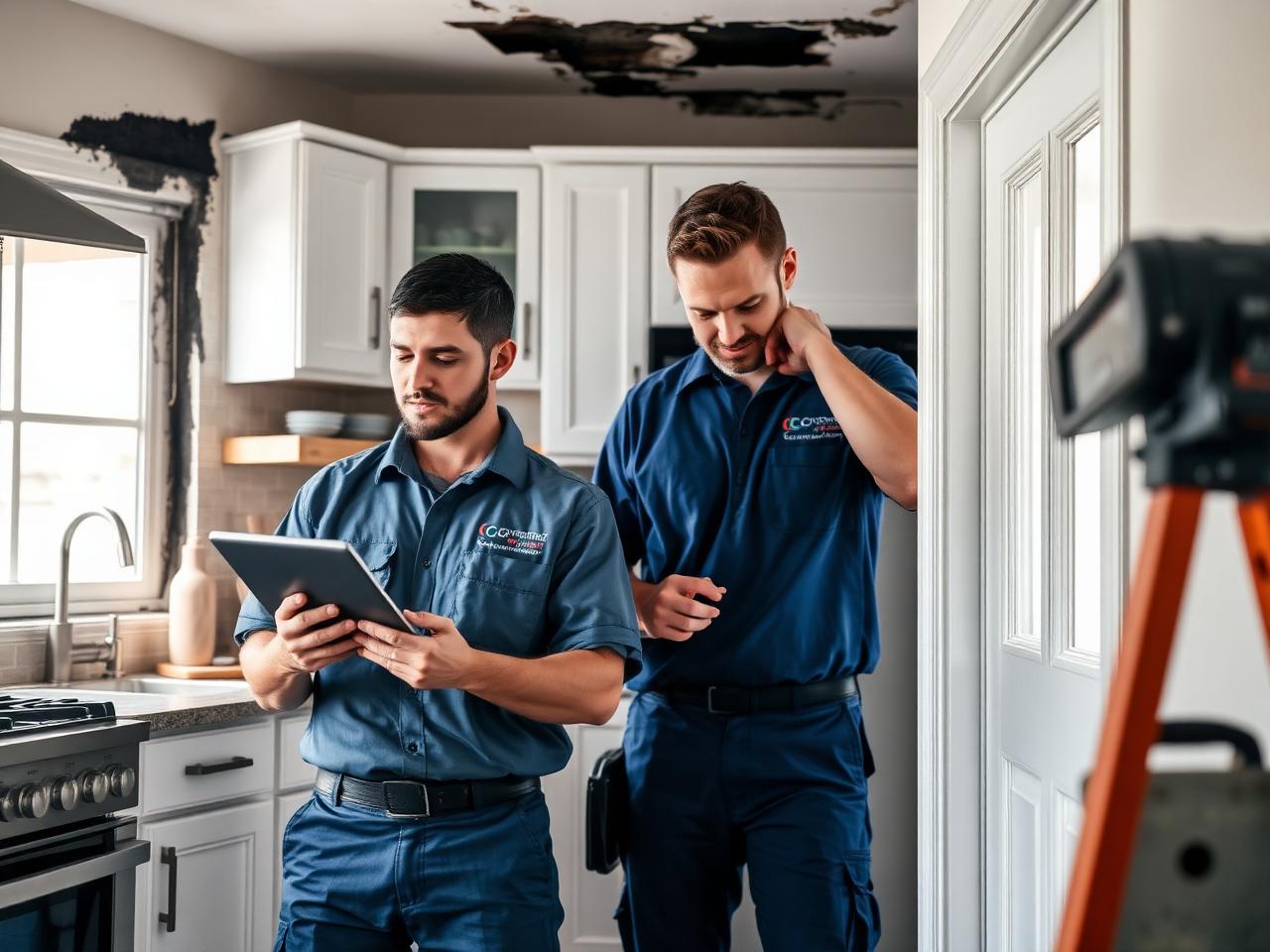
Air Duct Cleaning for Pinellas Park homes
Bayline Restoration Co. provides residential air duct cleaning throughout Pinellas Park, Pinellas County. Source removal cleaning of supply and return ductwork, plenums, and coils to reduce particulate and odor recirculation. We are an independent direct provider based in Tampa Bay, which means the crew assessing your Pinellas Park home is the crew doing the work, and we answer the phone twenty four hours a day.
Pinellas Park is one of the county's most mixed-use cities, combining dense residential neighborhoods with a substantial light industrial and commercial base along the major corridors. That means our work here splits between homes and commercial properties more evenly than in most Tampa Bay cities. Warehouse and light industrial water losses, retail and office drying, and residential slab leaks all show up regularly, and each requires different equipment staging.
Local conditions shape how this specific service is performed here. Inland Pinellas humidity and heavy summer rainfall. Less direct coastal wind exposure than the beach cities, but the same year-round moisture load that drives mold in unresolved water losses. Combine that with the housing profile in Pinellas Park and you get a distinct pattern of what fails, how fast it spreads, and what can realistically be saved. A large stock of single family block homes from the nineteen fifties through the nineteen eighties, extensive manufactured home communities, and a growing number of townhomes, alongside commercial and light industrial inventory.
Pinellas Park conditions that affect air duct cleaning
Pinellas Park sits in central Pinellas, generally flat and at low to moderate elevation with significant reliance on drainage infrastructure. Areas near Joe's Creek and other low drainage corridors are more susceptible to rainfall flooding.
Those conditions change the technical plan. Equipment placement, how aggressively we dehumidify, whether materials can be dried in place or need to come out, and how long verification takes are all influenced by the environment surrounding the structure rather than by the loss alone.
- Slab leaks and aging supply piping in mid-century homes
- Commercial and warehouse water losses on large slabs
- Rainfall flooding in low drainage areas
- Manufactured home community water losses
- Air conditioning condensate failures
- Roof leaks on flat and low slope commercial roofing
What causes air duct cleaning work in a home
Understanding the cause matters because the cause dictates the scope. Two properties with identical visible damage can require completely different work depending on how the damage occurred and how long the condition persisted. These are the situations we respond to most often in Tampa Bay:
- Renovation and construction dust pulled into unsealed returns
- Restoration work performed without duct isolation
- Smoke and soot distributed through the system during a fire event
- Moisture at the coil and plenum supporting microbial growth
- Pet dander and household particulate accumulating over years
- Deteriorating internal duct liner shedding fibers
- Rodent or insect intrusion into duct runs
- Long term operation with low quality or improperly seated filters
Why fast, correct action matters
Delay is the single largest cost multiplier in restoration work. The difference between responding within hours and responding within days is frequently the difference between drying and cleaning materials in place versus removing and rebuilding them. In a coastal Florida climate, ambient conditions work against you nearly every month of the year, so problems that might resolve on their own in a dry region simply do not here.
- Recirculated particulate aggravates allergies and respiratory sensitivity
- Microbial growth near the coil produces persistent odor throughout the building
- Restricted airflow forces the system to run longer and cost more
- Dirty coils reduce dehumidification, raising indoor humidity
- Contaminated ducts undermine an otherwise complete restoration job
- Debris accumulation shortens equipment life
Signs your home needs professional attention
Not every problem announces itself. Many of the calls we take start with a homeowner noticing something subtle and deciding to investigate rather than wait. These indicators are worth acting on:
- Visible dust or debris at supply and return register faces
- Dust settling on surfaces again within a day or two of cleaning
- A musty or stale smell that appears when the system cycles on
- Filters loading up far faster than the rated interval
- Uneven airflow between rooms on the same system
- Recent renovation, fire, or water damage in the property
Our air duct cleaning process
We work through a defined sequence on every project. The sequence exists because skipping or reordering steps is what causes work to be redone, and redone work is paid for twice.
- Step 1
System inspection and access planning
The technician inspects supply and return runs, plenums, the coil, and the blower compartment, then determines where access openings are needed. A camera inspection establishes the actual condition rather than assuming the system needs cleaning.
- Step 2
Containment and negative pressure setup
A high volume negative air collection unit is connected to the trunk line so all dislodged debris is pulled into filtration rather than pushed into the building. Registers are sealed to direct airflow through the system being cleaned.
- Step 3
Agitation and source removal
Rotary brushes, compressed air whips, and specialty tools dislodge adhered debris from duct interiors while the collection unit captures it. This is the step that separates real cleaning from vacuuming a register.
- Step 4
Coil, blower, and plenum cleaning
The evaporator coil, blower wheel, and plenum surfaces are cleaned because they are usually the dirtiest components and the most common source of odor and airflow restriction in a humid climate.
- Step 5
Register and grille cleaning
Supply and return covers are removed, washed, and reinstalled so the visible portion of the system matches the cleaned interior.
- Step 6
Antimicrobial treatment where warranted
Where microbial growth was present on hard duct surfaces, an appropriate treatment is applied after cleaning, not as a substitute for removal.
- Step 7
Sealing and system restoration
Access openings are closed and sealed to manufacturer standards, filters are replaced, and the system is tested to confirm normal operation and airflow.
- Step 8
Before and after documentation
Camera images from before and after cleaning document what was actually accomplished, which is the only reliable way to evaluate this service.
Equipment and methods we use
Professional results depend on professional equipment used correctly. Rental units and consumer tools are not sized, instrumented, or filtered the same way, and the gap shows up in outcomes rather than in the first hour of work.
- High volume HEPA filtered negative air collection units
- Rotary brush and air whip agitation systems
- Duct inspection cameras
- Coil cleaning equipment and appropriate cleaning agents
- Blower wheel cleaning tools
- Access panel creation and sealing materials
- HEPA vacuums
- Antimicrobial application equipment
Standards we work to
Cleaning follows source removal principles: mechanical agitation combined with continuous negative pressure collection, cleaning of the entire system rather than accessible sections only, and inspection documentation before and after. Fogging or spraying a system without removing the debris first is not cleaning.
Bayline Restoration Co. is an independent direct provider, which means the crew that assesses your home is the crew that performs the work. There is no national call center routing your address to whichever contractor happens to be available, no lead fee baked into your invoice, and no gap between what was promised on the phone and what shows up in the driveway. When you call, you reach people who work in Tampa Bay and who will be standing in your building.
That structure matters most when something goes wrong or the scope changes mid-project. A single accountable team means one set of documentation, one point of contact, and one party responsible for the result. We answer the phone twenty four hours a day because water, smoke, and storm damage do not observe business hours, and the first few hours of a loss determine most of what the repair will ultimately cost.
Residential scope we handle
Residential projects in this category regularly include the following. If your situation is not listed, it is still worth a call, because most of what we do is a variation on these scenarios.
- Whole-home supply and return duct cleaning
- Air handler, coil, and blower wheel cleaning
- Dryer vent line cleaning
- Post-renovation duct cleanup
- Post-fire smoke residue removal from ductwork
- Register and grille cleaning and replacement
What to do before we arrive
There are useful things you can do in the first hour, and there are things that make the job harder. This list covers both.
- Check and replace the filter, then note whether the smell or dust changes
- Look at the register faces and take photographs of any visible buildup
- Note whether the odor appears only when the system runs
- Check the condensate pan and line for standing water
- Consider whether recent construction or restoration work took place
- Ask for camera documentation before agreeing to any duct cleaning scope
Common mistakes to avoid
These are the errors we are called in behind most often. None of them are unreasonable choices in the moment, and all of them cost money later.
- Step 1
Buying the advertised whole-house special
Very low advertised prices generally cover a vacuum at the register face and an upsell on arrival. Real source removal requires equipment and hours that a rock bottom price cannot support.
- Step 2
Cleaning the ducts and ignoring the coil
The evaporator coil and blower wheel are usually the dirtiest parts of the system. Cleaning ducts and skipping them leaves the actual odor and airflow problem in place.
- Step 3
Fogging instead of cleaning
Applying a chemical treatment to a dirty system coats the debris rather than removing it, and the odor returns as soon as the treatment dissipates.
- Step 4
Cleaning ducts while the moisture problem persists
If the system is producing condensation or the pan is overflowing, growth returns quickly. Correct the moisture condition first.
- Step 5
Skipping proper access sealing
Access holes cut and poorly patched leak conditioned air into attics and wall cavities, costing efficiency for years.
How long the work takes
A typical single-system residential cleaning takes three to five hours depending on the number of runs, access difficulty, and coil condition. Larger homes with multiple air handlers take a full day. Commercial systems are quoted by unit count and linear footage and are commonly performed after hours over one or several nights so occupied operations are not disrupted.
Every project starts with a conversation about what happened, followed by an on-site assessment. We walk the affected areas with instruments rather than assumptions, define the actual scope, and explain what we found in plain language before any equipment comes off the truck. You will know what we plan to do, roughly how long it will take, and what drives the cost.
From there the work proceeds in documented phases. We photograph conditions, log readings where the job involves moisture, and provide updates as the project moves. When the scope needs to change because we discovered something behind a wall, we tell you before we act on it, not after. At completion you receive a documentation package covering the air duct cleaning that is suitable for your records or your insurance carrier.
Insurance and documentation
Routine duct cleaning is maintenance and is not an insurance item. Duct cleaning performed as part of a fire, smoke, or water loss is different: when the mechanical system distributed contamination during a covered event, cleaning it is a legitimate part of the restoration scope and we document it that way as part of the overall claim.
We do not tell you what your carrier will or will not pay, because that is their decision and your policy. What we control is the quality of the record: photographs taken before anything is disturbed, instrument readings logged over time, a line-item scope tied to the work actually performed, and a clear explanation of every item on it. A well documented file is the most effective thing a homeowner can bring to a claim conversation.
Preventing a repeat
Once the immediate problem is resolved, the useful question is how to keep it from happening again. These measures address the conditions behind most of the calls we take:
- Replace filters on schedule with a filter that actually fits the housing
- Have the system serviced twice a year in a humid climate
- Seal returns properly during any renovation work
- Keep the condensate line clear so the pan does not hold water
- Isolate the HVAC system during construction or restoration work
- Address any water intrusion near the air handler immediately
Air Duct Cleaning questions we hear most
These are the questions homeowners ask us most often about air duct cleaning. If yours is not covered here, call and ask. We would rather answer a question than have you guess.
How often should ducts be cleaned?
There is no universal interval. Clean when there is a reason: after construction or restoration, after a smoke event, when there is visible debris or persistent odor, or when the system has gone many years without service in a humid climate.
Will duct cleaning fix my allergies?
It can reduce recirculated particulate, which helps some people meaningfully. It is not a medical treatment and it will not help if the source is outdoor pollen entering through the envelope or a humidity problem supporting growth elsewhere.
Do you clean the coil and blower too?
Yes, and those components matter more than the duct runs in most Florida systems. Cleaning ducts while leaving a fouled coil in place rarely resolves odor or airflow complaints.
Is duct cleaning necessary after water or fire damage?
Frequently yes. Both events distribute particulate through the mechanical system, and a cleaned building connected to a contaminated duct system will recontaminate itself the first time the air handler runs.
Can I see the results?
You should insist on it. We provide camera images before and after so the work is verifiable rather than taken on faith.
Do you clean dryer vents?
Yes. Dryer vent lines are a fire risk when lint accumulates, and clearing the full run rather than just the trap is a straightforward addition to a duct cleaning visit.
Neighborhoods we cover for air duct cleaning in Pinellas Park
We provide this service across all of Pinellas Park, including these areas:
- Mainlands
- Gateway
- Pinellas Park Central
- Bonnie Bay adjacent areas
- Skyview
- Rio Vista adjacent areas
Getting a crew to your Pinellas Park property
Pinellas Park is centrally located within the county and is one of the quickest areas for us to reach from either the Gateway corridor or mid-county.
Reference points we route around in and near Pinellas Park include Freedom Lake Park, Park Boulevard corridor, US 19 commercial corridor, Pinellas Park Performing Arts Center, and the surrounding corridors. We serve ZIP codes 33781, 33782, 33565, 33760 and the adjacent areas of Pinellas County.
Bayline Restoration Co. is an independent direct provider, which means the crew that assesses your home in Pinellas Park is the crew that performs the work. There is no national call center routing your address to whichever contractor happens to be available, no lead fee baked into your invoice, and no gap between what was promised on the phone and what shows up in the driveway. When you call, you reach people who work in Tampa Bay and who will be standing in your building.
That structure matters most when something goes wrong or the scope changes mid-project. A single accountable team means one set of documentation, one point of contact, and one party responsible for the result. We answer the phone twenty four hours a day because water, smoke, and storm damage do not observe business hours, and the first few hours of a loss determine most of what the repair will ultimately cost.
Don't Let It Spread. Call Now.
24-hour response across Tampa Bay. Speak with the crew that does the work.