Odor Removal for Treasure Island homes
Bayline Restoration Co. provides residential odor removal throughout Treasure Island, Pinellas County. Source-based treatment for smoke, pet, biological, musty, and cooking odors using professional neutralization equipment. We are an independent direct provider based in Tampa Bay, which means the crew assessing your Treasure Island home is the crew doing the work, and we answer the phone twenty four hours a day.
Treasure Island is a barrier island city between Saint Pete Beach and Madeira Beach with wide Gulf beaches, canal-front residential neighborhoods, and a large resort and vacation rental presence. Because so much of the housing is on canals or directly on the Gulf, water is a factor in nearly every job, whether the source is a failed supply line inside a unit or surge and wind-driven rain from a Gulf system.
Local conditions shape how this specific service is performed here. Gulf front conditions with high salt exposure, strong sustained wind during storms, and surge sensitivity. Humidity is high year round, which affects both drying strategy and mold risk in vacant units. Combine that with the housing profile in Treasure Island and you get a distinct pattern of what fails, how fast it spreads, and what can realistically be saved. Canal-front single family homes, mid-century beach construction, condominium and resort inventory, and short term rental property. Many structures sit close to grade with limited elevation above the water table.
Treasure Island conditions that affect odor removal
A low lying barrier island between the Gulf of Mexico and Boca Ciega Bay, laced with residential canals. Bridges connect to the mainland, and the entire island is within a mandatory evacuation zone during significant storms.
Those conditions change the technical plan. Equipment placement, how aggressively we dehumidify, whether materials can be dried in place or need to come out, and how long verification takes are all influenced by the environment surrounding the structure rather than by the loss alone.
- Surge and canal flooding during tropical systems
- Vacation rental water losses found late
- Salt corrosion on mechanical and exterior systems
- Condominium and multi-unit water intrusion
- Mold in units closed between seasonal occupancy
- Wind-driven rain around windows and sliding doors
What causes odor removal work in a home
Understanding the cause matters because the cause dictates the scope. Two properties with identical visible damage can require completely different work depending on how the damage occurred and how long the condition persisted. These are the situations we respond to most often in Tampa Bay:
- Pet urine that penetrated carpet pad and subfloor
- Smoke residue bound into porous materials after a fire
- Microbial growth in wall cavities, attics, or the air handler
- Biological material and decomposition odors
- Cooking oil residue accumulated on surfaces and in ductwork
- Sewage backups and drain line failures
- Cigarette and cigar smoke absorbed into drywall and textiles
- Musty odor from prolonged high humidity in closed spaces
Why fast, correct action matters
Delay is the single largest cost multiplier in restoration work. The difference between responding within hours and responding within days is frequently the difference between drying and cleaning materials in place versus removing and rebuilding them. In a coastal Florida climate, ambient conditions work against you nearly every month of the year, so problems that might resolve on their own in a dry region simply do not here.
- Masking agents wear off and the underlying odor returns stronger
- Odor sources in cavities continue to produce compounds indefinitely
- Ozone treatment in occupied spaces is unsafe and can damage materials
- Persistent odor devalues property and complicates sale or lease
- Some odors indicate a health-relevant condition such as sewage or growth
- Repeated failed treatments cost more than one correct treatment
Signs your home needs professional attention
Not every problem announces itself. Many of the calls we take start with a homeowner noticing something subtle and deciding to investigate rather than wait. These indicators are worth acting on:
- Odor that returns when humidity rises or the HVAC cycles
- A smell that is stronger in one room, closet, or near a vent
- Air fresheners that mask for hours but never resolve it
- Odor noticed by visitors that occupants have stopped registering
- Smell that intensifies when carpet or upholstery is disturbed
- A history of pets, smoking, water damage, or fire in the property
Our odor removal process
We work through a defined sequence on every project. The sequence exists because skipping or reordering steps is what causes work to be redone, and redone work is paid for twice.
- Step 1
Source identification
Inspection with ultraviolet light for biological contamination, moisture meters for hidden water, and thermal imaging for cavity issues locates the actual source. Treating before locating the source is guesswork and it is why most odor jobs fail.
- Step 2
Source material removal
Contaminated carpet pad, saturated drywall, affected insulation, and other unsalvageable porous materials are removed. No treatment technology substitutes for taking out the material that is producing the odor.
- Step 3
Deep cleaning of affected surfaces
Remaining surfaces are cleaned with chemistry appropriate to the odor type. Enzyme treatments break down protein-based contamination while degreasers address cooking and smoke residues.
- Step 4
Sub-surface treatment
Where contamination penetrated to subfloor or into cavities, sub-surface extraction and direct application of treatment reach material that surface cleaning never touches.
- Step 5
Air scrubbing with carbon filtration
HEPA and activated carbon filtration run continuously to remove airborne particulate and adsorb volatile odor compounds while other work proceeds.
- Step 6
Hydroxyl or ozone treatment
Hydroxyl generators can run safely in occupied spaces and work more slowly, while ozone is faster and more aggressive but requires the space to be vacated and materials to be considered. We choose based on occupancy, timeline, and materials present.
- Step 7
Thermal fogging where appropriate
For smoke odor that penetrated the same paths the original smoke traveled, thermal fogging distributes a deodorizing agent along those identical paths to reach compounds in cracks and cavities.
- Step 8
Sealing and verification
Structural surfaces that retain odor after cleaning are sealed with an odor-blocking primer, then the space is allowed to normalize and reevaluated before it is released as complete.
Equipment and methods we use
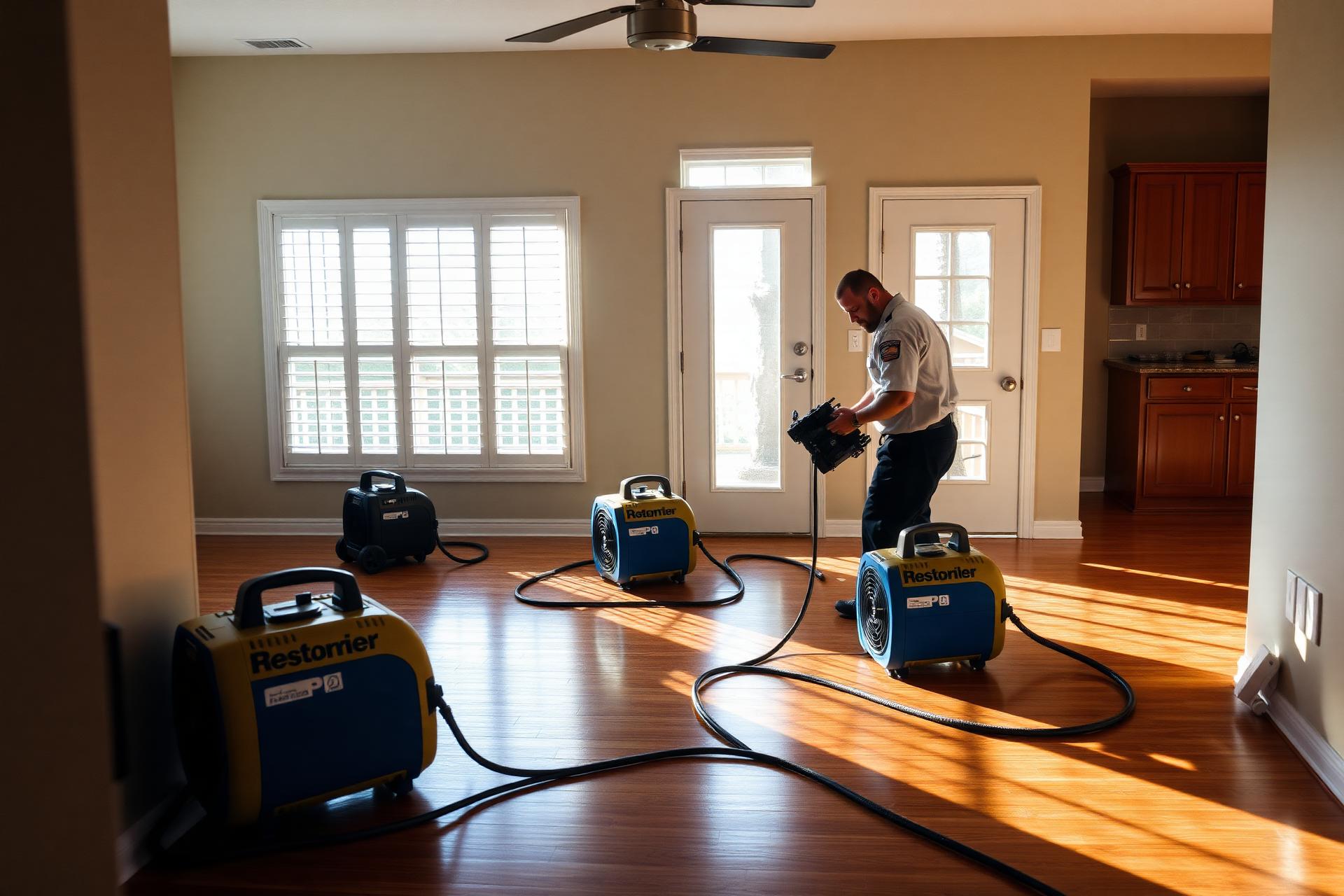
Professional results depend on professional equipment used correctly. Rental units and consumer tools are not sized, instrumented, or filtered the same way, and the gap shows up in outcomes rather than in the first hour of work.
- Hydroxyl generators
- Ozone generators for unoccupied spaces
- Thermal fogging units
- HEPA and activated carbon air scrubbers
- Ultraviolet inspection lights for biological contamination
- Sub-surface extraction tools
- Enzyme and oxidizing treatment application equipment
- Odor-blocking sealers and primers
Standards we work to
Our approach follows source removal before treatment. Equipment selection is based on occupancy and material compatibility, ozone is never run in occupied space, and we verify by reevaluating after the space has normalized rather than judging results while treatment equipment is still running.
Bayline Restoration Co. is an independent direct provider, which means the crew that assesses your home is the crew that performs the work. There is no national call center routing your address to whichever contractor happens to be available, no lead fee baked into your invoice, and no gap between what was promised on the phone and what shows up in the driveway. When you call, you reach people who work in Tampa Bay and who will be standing in your building.
That structure matters most when something goes wrong or the scope changes mid-project. A single accountable team means one set of documentation, one point of contact, and one party responsible for the result. We answer the phone twenty four hours a day because water, smoke, and storm damage do not observe business hours, and the first few hours of a loss determine most of what the repair will ultimately cost.
Residential scope we handle
Residential projects in this category regularly include the following. If your situation is not listed, it is still worth a call, because most of what we do is a variation on these scenarios.
- Pet urine odor including pad and subfloor treatment
- Smoke odor after fire or long-term indoor smoking
- Musty odor from humidity or past water damage
- Biological and decomposition odor remediation
- Kitchen and cooking odor saturation
- Whole-home treatment before sale or move-in
What to do before we arrive
There are useful things you can do in the first hour, and there are things that make the job harder. This list covers both.
- Ventilate the space if outdoor conditions allow
- Locate where the smell is strongest and note when it intensifies
- Stop using air fresheners, which make source identification harder
- Check for visible moisture, staining, or growth near the odor source
- Remove obviously contaminated porous items if you can do it safely
- Do not run consumer ozone generators in an occupied home
Common mistakes to avoid
These are the errors we are called in behind most often. None of them are unreasonable choices in the moment, and all of them cost money later.
- Step 1
Masking instead of removing
Fragrance products layer scent over the odor compound. The source keeps producing, and the smell returns as soon as the masking agent dissipates.
- Step 2
Running a consumer ozone machine at home
Ozone is a respiratory irritant, requires an unoccupied space, and can damage rubber, certain plastics, and some finishes. It is a professional tool with real handling requirements.
- Step 3
Cleaning carpet for pet odor and stopping there
Urine passes through carpet into pad and often subfloor. Cleaning the fiber removes the stain and leaves the odor reservoir untouched.
- Step 4
Painting over smoke odor
Standard paint is not an odor barrier. The compounds pass through and the odor reappears within weeks, requiring the work to be redone with a proper sealer.
- Step 5
Treating before finding the source
Every unsuccessful odor treatment we are called in behind skipped diagnosis. Equipment cannot compensate for source material that is still in the building.
How long the work takes
Straightforward odor jobs where the source is accessible and limited can be completed in one to two days. Cases requiring material removal, sub-surface treatment, and multi-day hydroxyl or ozone cycles run three to five days. Whole-structure smoke deodorization is measured in weeks and typically overlaps with fire restoration and reconstruction.
Every project starts with a conversation about what happened, followed by an on-site assessment. We walk the affected areas with instruments rather than assumptions, define the actual scope, and explain what we found in plain language before any equipment comes off the truck. You will know what we plan to do, roughly how long it will take, and what drives the cost.
From there the work proceeds in documented phases. We photograph conditions, log readings where the job involves moisture, and provide updates as the project moves. When the scope needs to change because we discovered something behind a wall, we tell you before we act on it, not after. At completion you receive a documentation package covering the odor removal that is suitable for your records or your insurance carrier.
Insurance and documentation
Odor removal tied to a covered loss such as fire, sewage backup, or a water event is generally part of that claim and is documented within the overall restoration scope. Odor from smoking, pets, or general use is a maintenance and property condition issue that is not typically covered, and we are direct with you about which situation applies.
We do not tell you what your carrier will or will not pay, because that is their decision and your policy. What we control is the quality of the record: photographs taken before anything is disturbed, instrument readings logged over time, a line-item scope tied to the work actually performed, and a clear explanation of every item on it. A well documented file is the most effective thing a homeowner can bring to a claim conversation.
Preventing a repeat
Once the immediate problem is resolved, the useful question is how to keep it from happening again. These measures address the conditions behind most of the calls we take:
- Address pet accidents immediately with a proper enzyme treatment
- Keep indoor humidity controlled to limit musty odor development
- Have the range hood and kitchen exhaust serviced regularly
- Resolve water intrusion within twenty four to forty eight hours
- Service the HVAC system and keep the condensate line clear
- Ventilate closed spaces such as guest rooms and storage areas periodically
Odor Removal questions we hear most
These are the questions homeowners ask us most often about odor removal. If yours is not covered here, call and ask. We would rather answer a question than have you guess.
Can you remove pet odor permanently?
Usually yes, when we can reach all the contaminated material. That may mean pad replacement, sub-surface treatment, and sealing the subfloor. Cleaning carpet fiber alone will not resolve odor that has soaked below it.
Is ozone treatment safe?
It is safe when performed correctly in an unoccupied space with proper aeration afterward. It is not safe to run around people or pets, and it can damage certain materials, which is why hydroxyl is often the better choice in occupied buildings.
How long does the treatment last?
Permanently, provided the source was removed. Odor recurrence always traces back to source material that was left in place or an ongoing condition such as moisture that was never corrected.
Can smoke odor be removed from a whole house?
Yes, but it requires the full sequence: residue removal, duct cleaning, treatment, and sealing of structural surfaces. Shortcut versions consistently fail because the compounds live in porous materials and the mechanical system.
Why does the smell come back on humid days?
Humidity and heat reactivate odor compounds bound in porous materials. A smell that returns with weather is a reliable indicator that source material remains in the structure.
Do I need to leave during treatment?
For hydroxyl treatment, usually not. For ozone, yes, and the space must be aerated before reoccupancy. We explain occupancy requirements before treatment begins.
Neighborhoods we cover for odor removal in Treasure Island
We provide this service across all of Treasure Island, including these areas:
- Sunset Beach
- Isle of Capri
- Paradise Island
- Sunshine Beach
- Boca Ciega Isle
- Central Gulf Boulevard
Getting a crew to your Treasure Island property
Treasure Island is reached via the bridge corridors from Saint Petersburg and mid Pinellas. We plan routing around bridge access and seasonal traffic.
Reference points we route around in and near Treasure Island include Treasure Island Beach, John's Pass approach, Treasure Island Marina, Sunset Beach, and the surrounding corridors. We serve ZIP codes 33706 and the adjacent areas of Pinellas County.
Bayline Restoration Co. is an independent direct provider, which means the crew that assesses your home in Treasure Island is the crew that performs the work. There is no national call center routing your address to whichever contractor happens to be available, no lead fee baked into your invoice, and no gap between what was promised on the phone and what shows up in the driveway. When you call, you reach people who work in Tampa Bay and who will be standing in your building.
That structure matters most when something goes wrong or the scope changes mid-project. A single accountable team means one set of documentation, one point of contact, and one party responsible for the result. We answer the phone twenty four hours a day because water, smoke, and storm damage do not observe business hours, and the first few hours of a loss determine most of what the repair will ultimately cost.
Don't Let It Spread. Call Now.
24-hour response across Tampa Bay. Speak with the crew that does the work.